Couples Therapy
Rebuild trust, communicate without the same argument on repeat, and feel like a team again — couples counselling in Floreat.
What is Couples Therapy?
Couples therapy — also called couples counselling or relationship counselling — is a form of psychological support where both partners attend sessions together with a therapist. Rather than treating one person as “the problem”, it focuses on the relationship itself: the patterns of communication, conflict, trust and connection that have developed between you.
At Kirwan Clinic, our couples counselling is Gottman-informed — it draws on the research of Drs John and Julie Gottman, who studied thousands of couples over more than four decades. That research offers practical, structured ideas for strengthening friendship and intimacy, managing conflict more calmly, and building shared meaning — the things research shows lasting, happy relationships are actually built on. Claire brings these ideas into her work alongside her broader counselling experience, rather than offering formal Gottman Method therapy.
Couples therapy is not about deciding who is right, and the therapist does not take sides. It is a structured, supported space to understand what is happening between you, and to learn a different way of having the conversations that matter.
Couples Counselling with Claire Ross
Claire Ross is a Counsellor at Kirwan Clinic with six years’ experience in couples counselling. She is Gottman Level 2 trained and takes a Gottman-informed approach, drawing on Gottman research and ideas such as the Sound Relationship House to guide the work.
Claire offers dedicated Wednesday evening appointments for couples, so therapy can fit around work and family life. Couples are welcome with or without children — whether you are navigating new parenthood, the school years, an empty nest, or a relationship with no children at all.
Alongside couples work, Claire also provides individual counselling and emotion-regulation groups at the clinic.
- $220 per couples session
- 70-minute longer sessions, so both partners are heard
- Wed evenings: dedicated couples appointments
Who is Suitable for Couples Therapy?
Couples therapy is suitable for partners at any stage of a committed relationship — dating, engaged, married or de facto, with or without children — who want to work on the relationship together. It can help whether you have one specific issue to resolve or a general sense that things are not as good as they used to be. It is particularly helpful for:
- Frequent arguments, or the same argument repeating without resolution
- Communication breakdown — feeling unheard, criticised, or shut out
- Emotional distance, loneliness within the relationship, or loss of intimacy and affection
- Breaches of trust, including infidelity, and the work of rebuilding afterwards
- Conflict about parenting, blended families, in-laws, money, work, or the division of household labour
- Life transitions — a new baby, children starting school or leaving home, relocation, illness, grief, or retirement
- One or both partners feeling more like housemates or co-parents than partners
- Pre-marital counselling — building strong foundations before marriage
- Couples who are broadly happy but want to strengthen and protect the relationship
You do not need to be in crisis to benefit. In fact, couples who come earlier — before resentment and distance become entrenched — usually find change comes more easily.
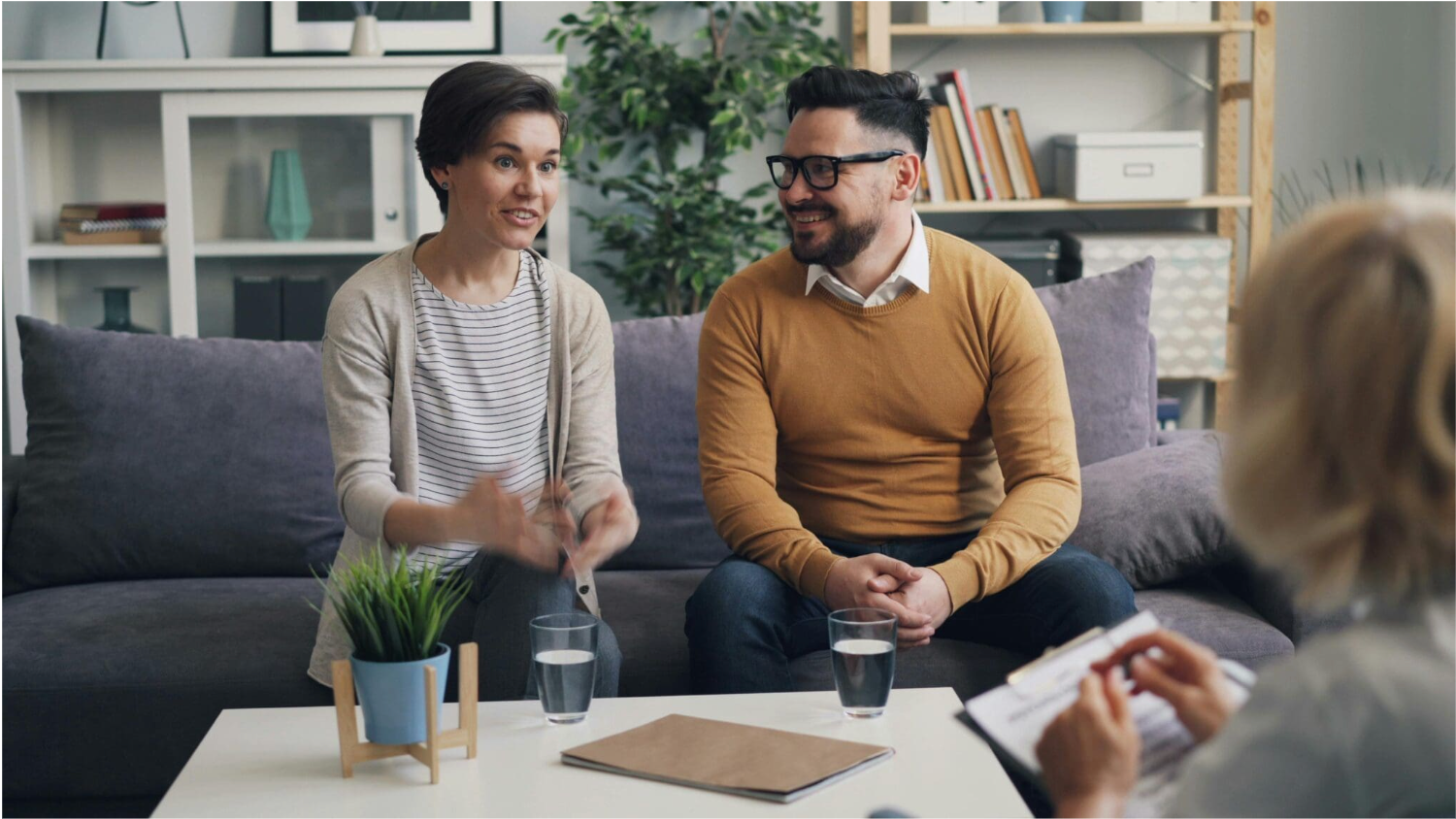
Sessions are held together, in person at our Floreat clinic — both partners, one conversation, with the therapist guiding it.
Benefits of Couples Therapy
- Better Communication – Learn to raise concerns clearly and listen so your partner feels genuinely heard, instead of conversations escalating or shutting down.
- Healthier Conflict – Conflict itself is not the problem — most relationship problems are perpetual. Therapy helps you dialogue about them calmly rather than getting gridlocked and hurt.
- Rebuilt Trust – A structured way to work through breaches of trust, with honesty, accountability and repair.
- Renewed Friendship and Intimacy – Rebuild the fondness, admiration and everyday connection that buffer a relationship against hard times.
- A More Positive Perspective – When the friendship system is strong, partners give each other the benefit of the doubt again — small irritations stop feeling like big threats.
- Shared Goals and Meaning – Get back on the same team about money, parenting, work and the life you are building together.
- Skills That Last – The tools are practical and designed to be used at home, long after therapy ends.
- Research-Informed – The work draws on over 40 years of Gottman research into what makes relationships succeed or fail, alongside established counselling practice.
Our Approach — Gottman-Informed Counselling
Claire’s approach is informed by Gottman research, alongside her general couples counselling experience. One framework that helps guide the work is the Sound Relationship House, developed from that research: nine components of a strong relationship, stacked like the levels of a house and held up by two walls — Trust and Commitment. It offers a helpful map for thinking together about which parts of your relationship feel strong and which might need attention.
Click each level to read more:
The Sound Relationship House
7 Create Shared Meaning
Building a life together with shared goals, values, rituals and roles — the sense that you are creating something together that is bigger than either of you alone.
6 Make Life Dreams Come True
Creating an atmosphere where each partner feels safe to talk honestly about their hopes and dreams, and actively supports the other in making them happen.
5 Manage Conflict
Learning to accept your partner’s influence, dialogue calmly about gridlocked problems, practise self-soothing during heated moments, and compromise — without criticism, contempt, defensiveness or stonewalling.
4 The Positive Perspective
When friendship and goodwill are strong, partners interpret each other generously. A positive perspective means repair attempts during conflict land, and negativity doesn’t take over.
3 Turn Towards Instead of Away
Everyday moments of connection — a comment, a question, a bid for attention — are opportunities to turn towards your partner. Small moments, responded to often, build a deep bank of trust and closeness.
2 Share Fondness and Admiration
Expressing appreciation, respect and affection — and being able to recall why you chose this person — is one of the strongest antidotes to contempt and a hallmark of happy couples.
1 Build Love Maps
The foundation: knowing your partner’s inner world — their worries, hopes, history, and what their days are actually like right now. Couples who keep updating their love maps weather life’s changes together.
Trust: “Are you there for me?”
Commitment: “We’re in this together.”
The two walls of the house. When trust and commitment are solid, every other level is easier to build.
Sessions also pay attention to interaction patterns that relationship research has found particularly corrosive — sometimes described in Gottman research as the Four Horsemen: criticism, contempt, defensiveness and stonewalling — and explore healthier alternatives, such as raising issues gently, expressing appreciation, taking responsibility, and taking time to self-soothe.
Preparation Before Starting Couples Therapy
A little preparation helps you get the most from your sessions. Before your first appointment:
- Come Together – Both partners attend. Couples therapy works on the relationship, so it is most effective when both people are in the room and willing to take part.
- Reflect on Your Goals – Think about what you would each like to be different. You don’t need to agree on the goals yet — differences are part of the work.
- Expect an Assessment Phase – Therapy begins with a thorough assessment of your relationship, which may include questionnaires. Completing these honestly and promptly helps your therapist tailor the work.
- Be Prepared for Honesty – Therapy works best when both partners can speak openly, including about difficult topics. Your therapist will help keep those conversations safe and constructive.
- Think in Patterns, Not Blame – It helps to arrive curious about the patterns you have fallen into together, rather than building a case against your partner.
- Plan the Practicalities – Sessions are 70 minutes and held on Wednesday evenings at our Floreat clinic. Arrange childcare if you need it, and allow a little breathing room afterwards rather than rushing straight back into the evening.
What Happens During a Couples Therapy Session?
Couples therapy at Kirwan Clinic follows a structured format, informed by Gottman research:
- Joint Assessment Session – Your first session is together. Your therapist hears the story of your relationship — how you met, what has been good, and what has become difficult — and observes how you discuss a current area of disagreement.
- Individual Sessions – Each partner then meets the therapist individually, so your personal history, concerns and hopes are fully understood.
- Questionnaires – You will each complete a set of research-based questionnaires about the relationship, which your therapist scores and interprets.
- Feedback and Treatment Plan – In the next joint session, your therapist shares a picture of your relationship’s strengths and challenges and agrees goals and a plan with you.
- Therapeutic Sessions – From there, sessions focus on the areas that need work: rebuilding friendship and fondness, learning to manage conflict and stuck issues, and building shared goals. You will practise new ways of talking together in the room, with the therapist coaching in the moment.
- Between-Session Practice – Small, specific exercises to try at home — appreciation practices, stress-reducing conversations, gentle start-ups — so new patterns take hold in daily life, not just in the clinic.
Sessions are 70 minutes long, held on Wednesday evenings, and cost $220 per session.
What to Expect from Couples Therapy
Many couples who engage with the process report meaningful improvement in communication, conflict and closeness. Progress depends on factors such as:
- Both Partners’ Commitment – Outcomes are best when both people attend consistently and practise the skills between sessions.
- How Entrenched the Patterns Are – Difficulties caught early usually shift faster. Long-standing distance or repeated breaches of trust can take longer — that is normal, not a sign of failure.
- Willingness to Look at Your Own Part – Change accelerates when each partner can own their contribution to the pattern, not only the other’s.
- What Else Is Going On – Untreated individual difficulties — such as depression, anxiety, trauma or substance use — can slow couples work, and may need support in their own right alongside it.
Many couples notice conversations at home becoming calmer within the first several sessions, with deeper repair of trust and intimacy building over the following months. The goal is not a relationship without conflict — it is a relationship where conflict no longer damages the connection, and the friendship at its centre is strong again.
Couples Therapy Challenges
Couples therapy is generally a safe and constructive process, but it helps to go in with realistic expectations:
- It Can Feel Uncomfortable at Times – Talking honestly about hurt, unmet needs or betrayal can stir strong emotions before things improve. Your therapist is trained to keep sessions contained and respectful.
- Both Partners Need to Participate – Couples therapy cannot do its work if one partner attends only under protest or is unwilling to change anything. If one partner is unsure, an initial appointment to discuss concerns can still be a useful first step.
- Change Takes Practice – Insight alone doesn’t shift a relationship; the between-session practice is where new habits form.
- Not a Quick Fix for a Crisis of Trust – Rebuilding after infidelity or a major breach of trust is possible — but it takes time and sustained effort from both partners.
- When Couples Therapy Isn’t the Right First Step – If there is current family violence, coercive control, or an untreated addiction or serious untreated mental health condition, individual and specialist support — and safety — need to come first. We can talk through the safest options with you.
While it’s never too late to work on a relationship, starting earlier — before distance and resentment harden — generally leads to better outcomes. If you’re unsure whether couples therapy is right for you, call us and we’ll talk it through.
Book a Couples Session
Couples counselling with Claire Ross — Wednesday evenings at Floreat. $220 for a 70-minute session. Couples with or without children welcome. Call
(08) 6285 5870 or
email the clinic.